Host: Dr. Sama A, Guest: Dr. Nurul Aini Osman | The Sustainability Side, Episode 7 Recap
Every year, the world generates over 50 million tons of electronic waste, and less than 20% is recycled properly. But imagine what happens when a devastating flood hits.
Suddenly, that global crisis becomes a local one. Damaged electronics pile up, toxic substances leak into the environment, and vulnerable communities are left with yet another layer of disaster to manage.
In this episode of The Sustainability Side, we tackle a powerful question: How can flood-affected communities turn the challenge of e-waste into an opportunity for empowerment and circular growth?
We were joined by Dr. Nurul Aini Osman, a senior lecturer at Taylor’s University Malaysia and a leading voice in sustainable e-waste management. Her work bridges the gap between disaster recovery and community-driven innovation.
1. The Hidden Crisis: Why Floods Worsen E-Waste
When we think of floods, we usually picture damaged homes or ruined roads. But Dr. Nurul points out a less visible impact: our electronics.
The Submergence Problem
When household appliances like TVs, computers, or air conditioners are submerged in dirty floodwater, they suffer from rapid corrosion and short circuits. Most people assume they are “beyond repair.”
The “Pressure” Effect
During the panic of post-flood cleanup, waste management systems come under extreme pressure. Without a plan, hazardous e-waste—filled with lead, mercury, and flame retardants—gets mixed with general debris. This leads to:
- Soil and Water Contamination: Toxic chemicals leaching into natural resources.
- Health Risks: Communities unknowingly handling dangerous materials.
2. Turning the Tide: The Community Hub Model
Dr. Nurul shared a brilliant case study from her work in Hulu Langat, Malaysia, an area frequently hit by floods. Instead of viewing damaged electronics as a burden, they built a framework for resilience.
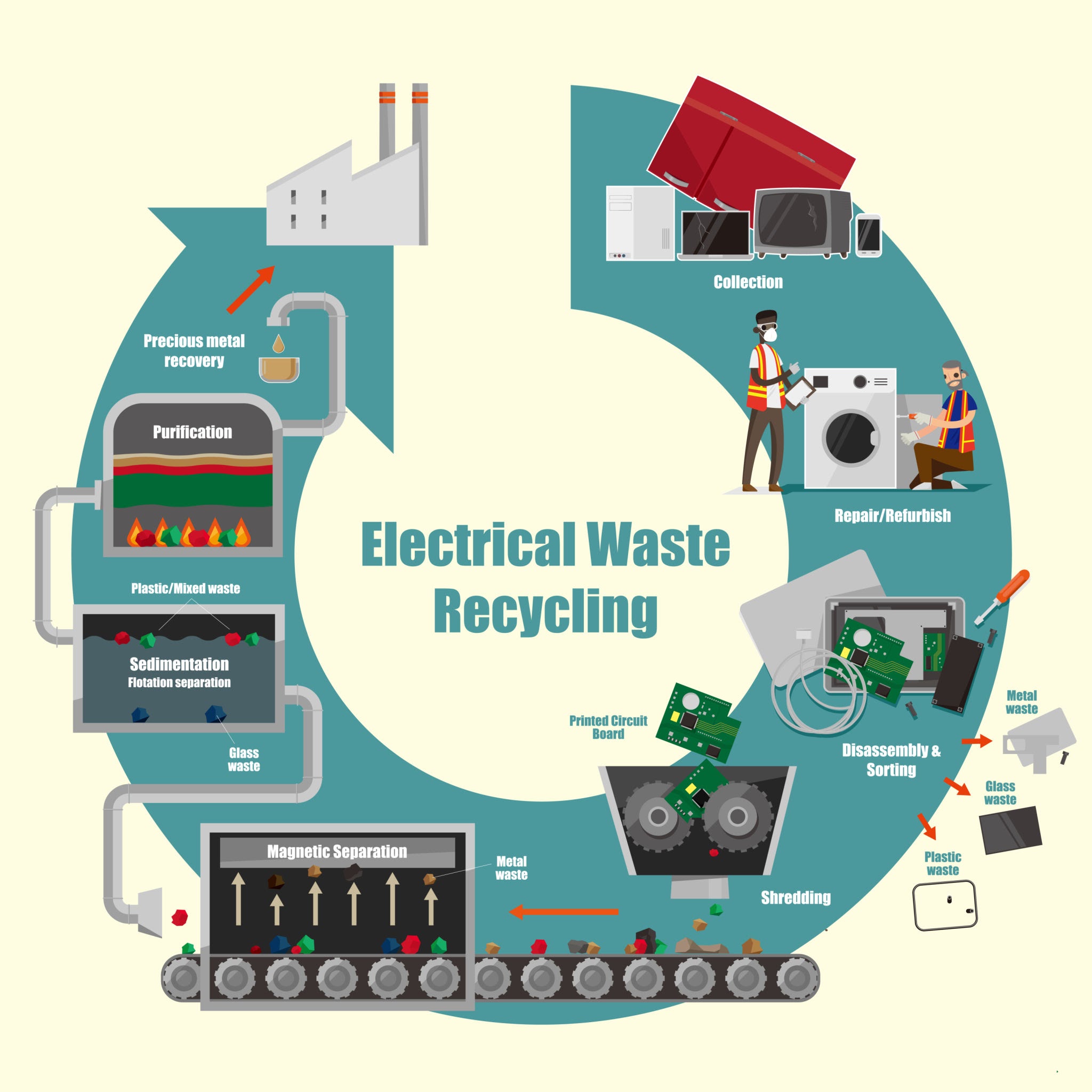
The E-Waste Recycling Hub
The community established local hubs strategically placed outside high-flood-risk zones. These hubs serve three main purposes:
- Skills Training: Local youth are trained in dismantling, sorting, and identifying e-waste categories.
- Repair & Upcycling: Providing technical vocational education to fix what can be saved.
- Incentive Systems: Partnering with licensed recyclers to offer vouchers or discounts to families who return their damaged goods properly.
This turns a cleanup chore into a local economy that supports livelihoods while protecting the environment.
3. Policy & Participation: The “Japan Model”
Where does the rest of the world stand? Dr. Nurul highlights Japan as the gold standard for e-waste management in Asia.
The secret? Extended Producer Responsibility (EPR). In this model, the companies that make the electronics are responsible for their entire lifecycle. Recycling fees are often built into the purchase price, and users get incentives for returning old devices.
The Lesson for Us: While we wait for full-scale government policies like EPR to hit every region, the “grassroots” participation of communities is the foundation. As Dr. Nurul says, “Sustainability isn’t just about systems; it’s about people.”
4. Your Action Plan: How to be “Flood-Ready”
Whether you live in a flood-prone area or just want to manage your household tech better, Dr. Nurul suggests starting small:
- The Labeling Habit: Identify your major electronics. If a flood warning hits, move them to higher ground or have a designated “collection point” to prevent them from being swept away.
- Know Your Channels: Don’t just throw an old phone in the trash. Use local e-waste apps (like Malaysia’s e-waste app) or find licensed recyclers in your area.
- Mindset Shift: Stop seeing old tech as “garbage.” See it as a resource that contains valuable metals and components that belong back in the loop.
Conclusion: Reimagining Waste as a Resource
Disaster recovery doesn’t just have to be about getting back to “normal.” It can be about building back smarter. By integrating circular economy principles into disaster management, we turn a post-flood crisis into a catalyst for new skills, safer environments, and more resilient communities.
Every action counts. Whether it’s repairing a device or advocating for better local policies, you are helping build a sustainable future.
Ready to dive deeper into the science of resilience? Support The Sustainability Side on Patreon and Ko-fi to access exclusive toolkits on disaster waste management and behind-the-scenes content from our researchers.
Check out the episode on YouTube: Click here
Connect with Dr. Nurul Aini Osman: You can find her work through Taylor’s University Malaysia or follow her research on environmental sustainability and community empowerment.

Leave a Reply